
Where content meets process
Approvals, handovers, internal requests. The process already exists in your organisation — it just isn't in any system.
A reactive engine coordinates what happens next: routing work, triggering notifications, updating records across systems. Built for organisations that need reliability, not just features.
The process engine
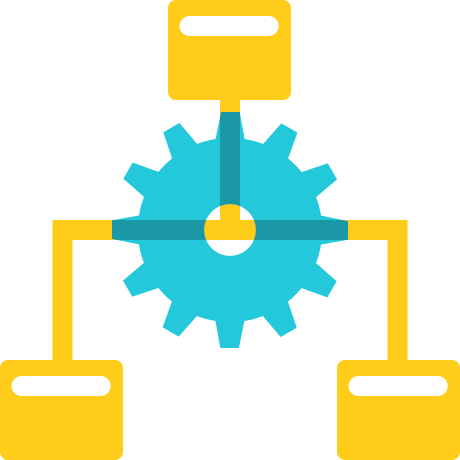
Work item types, statuses, transitions and transition conditions are defined in configuration, not in code.
Process as data
A process can be changed after it goes live, which matters more in practice than how quickly it can be introduced. No release, no deployment window.

Many processes, side by side
An organisation can run any number of processes at once, each with its own workflow, under one permission model.

Records, not tickets
Every work item is a record with its own history: who moved it, when, from which state to which, and why. The same audit trail as the rest of the platform.
Agents with accountability
Agents run under a user, with the same permissions as a person. Every exchange with a language model is retained together with its token usage — the same audit record as everything else.
The reactive engine
The part that isn't a workflow diagram.
Changes in the system are published as events, and other parts of the platform — or external systems — react to them. A record moving to a new state can notify a department, create a follow-up item, or push data to an ERP, without any of those being wired into the process itself.
This is what makes a process changeable after it goes live: the steps don't call each other directly. They publish and subscribe.
Integration
Business systems don't exist in isolation. Work items need to reach the systems where the work actually happens.
Webhooks
Events are pushed to external systems as they happen, instead of being polled for. Polling integrations are slow and fragile; this is neither.
Documented APIs
Open interfaces to ERP, CRM, financial and marketing systems. Data moves in both directions.

One sign-in
Applications — including external ones — register into the same administration layer. A user signs in once and reaches everything they are entitled to.
Built for regulated estates
We've built integrations for banks, insurers and enterprises with complex compliance requirements. If it has an API, we can connect to it.
What this replaces
The usual alternative is procurement. A new approval chain means evaluating a tool, buying it, integrating it, granting access to it and training people on it — and then doing the same again for the next process, with a different vendor and a different permission model.
Five tools, five sign-ins, and no single place where you can answer who is allowed to do what.
Every new internal process usually means another system. After the first process here, the second is configuration.
Where this module starts
Works is the process and record layer. It doesn't collect data from the public — that's what forms are for, and they belong to the content layer.
The two meet at one point: a submission can start a work item. Beyond that they are independent. You can run forms without any process behind them, and processes that no form ever touches.
What's next
The platform is continuously evolving. The roadmap includes new modules built to the same standard.
Task management for teams. Contract lifecycle management. Resource scheduling. Each built with the same philosophy: powerful enough for complex requirements, simple enough for daily use.
Interested in early access? Let's talk about your specific needs.